Why Renovation is Becoming More Sustainable Than New Construction
The most sustainable building project may not always be the one that starts from the ground up. As architects and designers look for new ways to reduce embodied carbon and support Net Zero goals, the focus is shifting toward a simple but powerful idea: preserve what already exists.
How the Circular Economy Support Net Zero Buildings
This is the foundation of the circular economy: keeping materials in use longer, reducing waste, and creating spaces that can adapt over time. In commercial environments such as workplaces, education facilities, healthcare spaces, transportation hubs, and entertainment venues, this approach is changing how renovations are planned.
Why Reusing Existing Building Materials Reduces Embodied Carbon
Traditionally, interior renovations often begin with demolition. Existing materials are removed, discarded, and replaced with new systems even when portions of the original infrastructure remain functional. Today, designers are challenging that approach by asking: What can be reused, renewed, or transformed instead?
Modular Ceiling Systems Support Circular Design
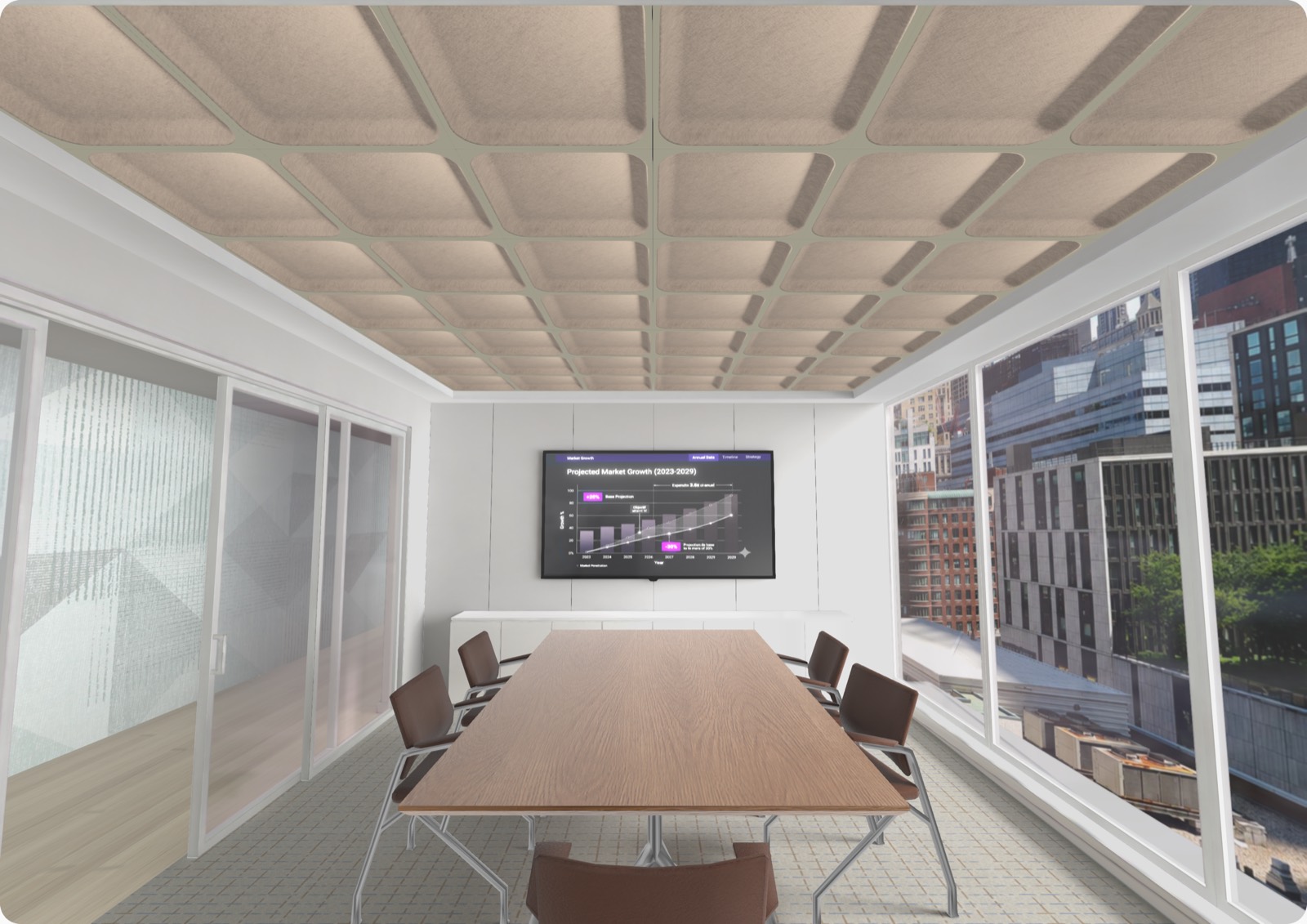
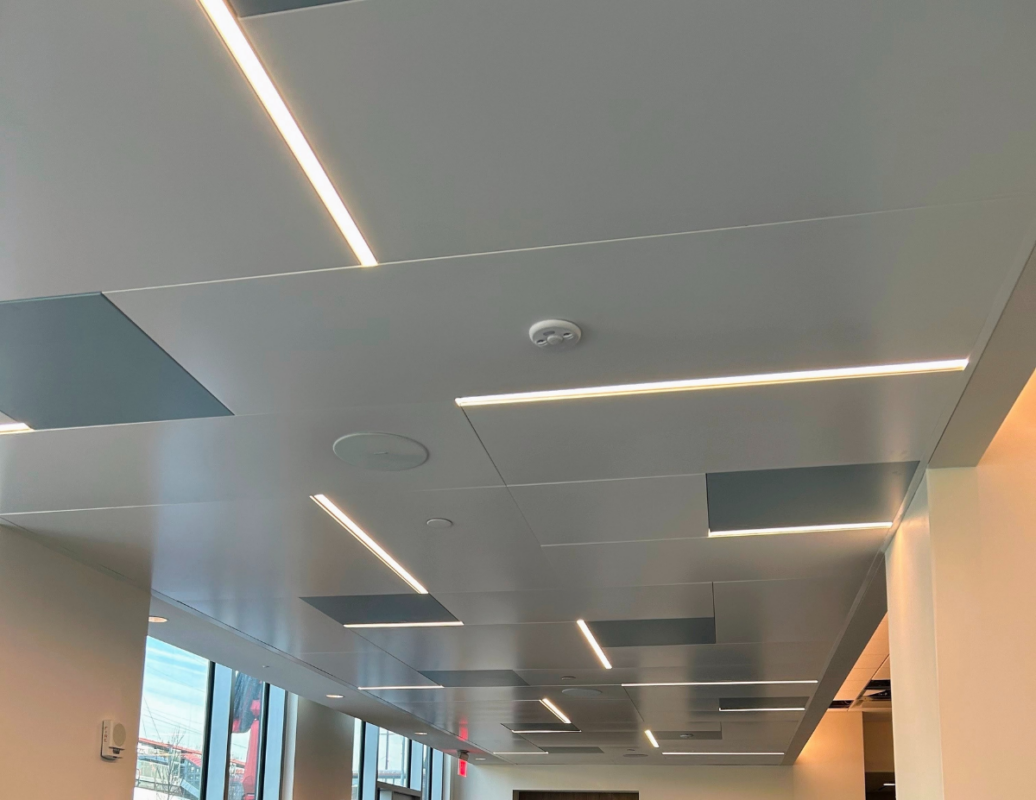
Ceiling systems provide an excellent example. In many buildings, the existing suspension grid remains durable and serviceable long after interior finishes have reached the end of their design cycle. Preserving that infrastructure can reduce demolition waste, minimize material replacement, and help lower the embodied carbon associated with renovation.
A Practical Example of Circular Renovation
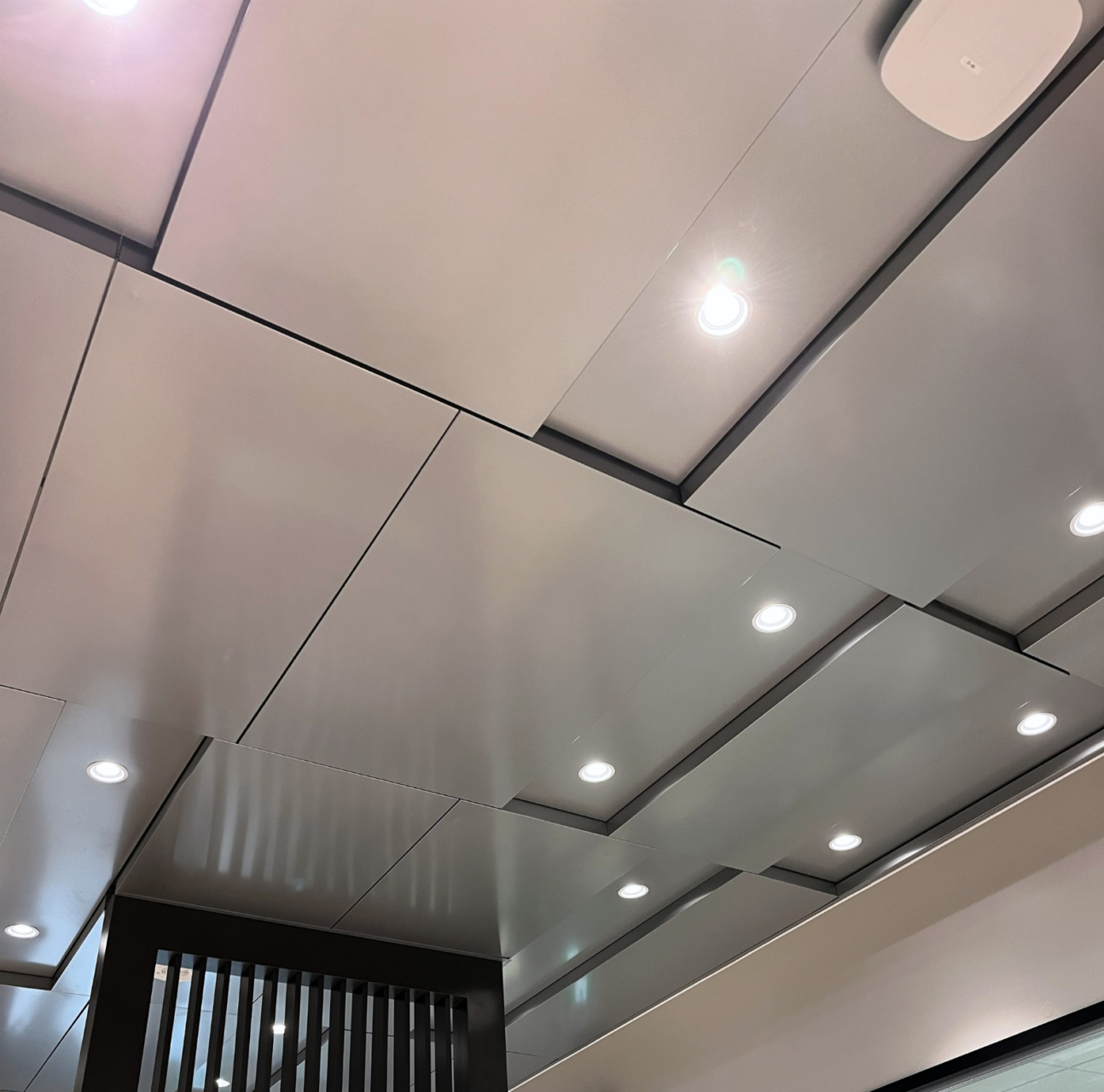
This philosophy is reflected in solutions such as Maxxit’s Mozaix System, a modular ceiling system designed to install on existing suspension grid systems. By working with the existing infrastructure, designers can transform interiors with new patterns, textures, and visual experiences while supporting a more resource-conscious approach to renovation.
Circular design does not mean limiting creativity—it expands the possibilities. It encourages designers to think differently about materials, longevity, and how spaces can evolve over time.
Designing Commercial Interiors for a Circular Future
As the built environment moves toward Net Zero, the future of commercial design will not only be about what we add. It will also be about what we choose to preserve.
Because sometimes the most sustainable design decision is recognizing the value that already exists.